Normal Distribution
The bell curve and the 68-95-99.7 empirical rule, explained with worked examples — from resting heart rate to manufacturing tolerances.
Read the guide →Loading...
From descriptive statistics and hypothesis testing to regression and correlation — a free, GCSE-to-PhD statistics education platform built to make every concept click.
Free forever — no account, no paywall, no login required
Core Concepts
Statistics fundamentals are the precise tools for summarizing data, quantifying uncertainty, and drawing honest conclusions from a sample. Every field of research and data-driven decision-making builds on these foundations.
The bell curve and the 68-95-99.7 empirical rule, explained with worked examples — from resting heart rate to manufacturing tolerances.
Read the guide →What r actually measures, a full worked example, and exactly why correlation never proves causation — with real mechanisms for false correlations.
Read the guide →The addition rule, multiplication rule, and conditional probability — with worked examples including sampling without replacement.
Read the guide →Null and alternative hypotheses, p-values, Type I/II errors, and the full six-step framework — worked through a real example start to finish.
Read the guide →Why sample means become normally distributed regardless of the population's shape — the result that makes most of inferential statistics possible.
Read the guide →What "95% confidence" actually means, how to build an interval for a mean or proportion, and how to choose a sample size in advance.
Read the guide →Why Statistics Fundamentals
More than a website — a complete learning environment where statistics fundamentals become intuitive through worked examples and shown reasoning, not memorization.
From descriptive statistics through hypothesis testing to regression — every core concept explained with depth and clarity by statistics educators.
Every calculator shows the formula, the worked substitution, and the final answer — not just a number. Understanding, not just answers.
We don't just hand you formulas. Every topic starts with why the method exists before introducing the mathematics.
GCSE to PhD — get direct, personalized help from a real statistics tutor, not just self-study articles.
Every article includes genuine worked problems with real numbers, not abstract formulas alone — so the method actually sticks.
Quality statistics education should never sit behind a paywall. Every article and calculator we build is completely free.
Comprehensive Curriculum
Our curriculum covers statistics fundamentals from descriptive statistics through hypothesis testing and regression. Each topic is built for genuine understanding, not exam prep alone.
Mean, Median, Mode, Standard Deviation, Variance, Quartiles, IQR
Basic Probability Rules, Conditional Probability, Bayes' Theorem, Expected Value
Normal Distribution, Z-Scores, Binomial Distribution, the Empirical Rule
Central Limit Theorem, Standard Error, Confidence Intervals, Sample Size
Null & Alternative Hypotheses, P-Values, T-Tests, Chi-Square, ANOVA
Pearson Correlation, Simple Linear Regression, R², Residual Analysis
Available now
Latest Articles
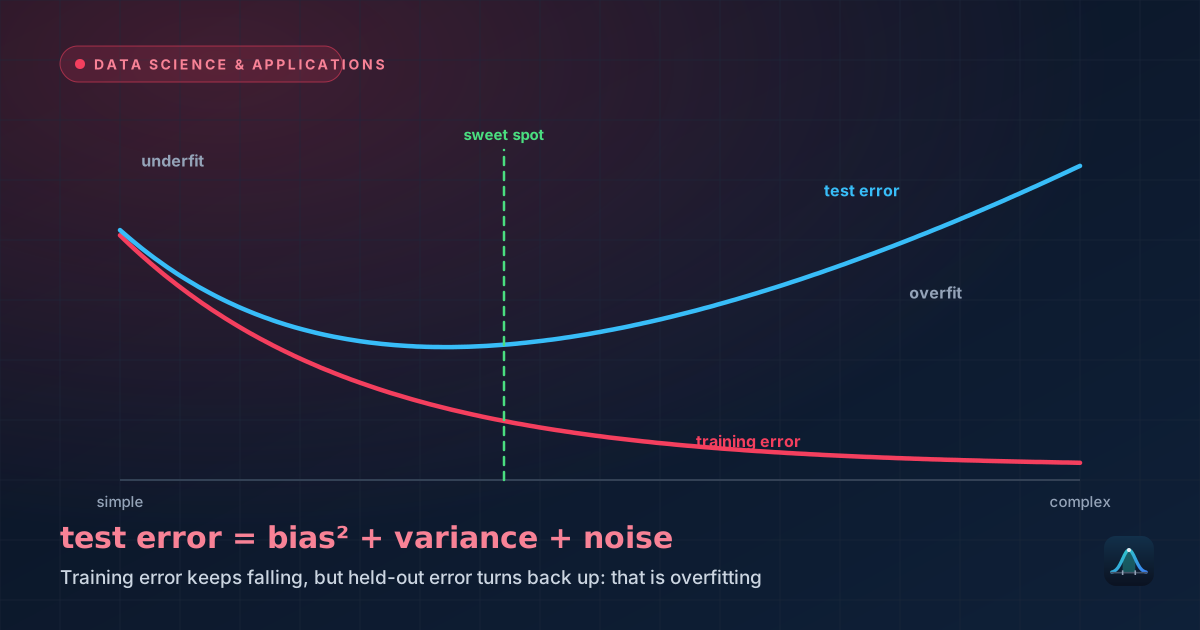
 Statistics Fundamentals Editorial Team
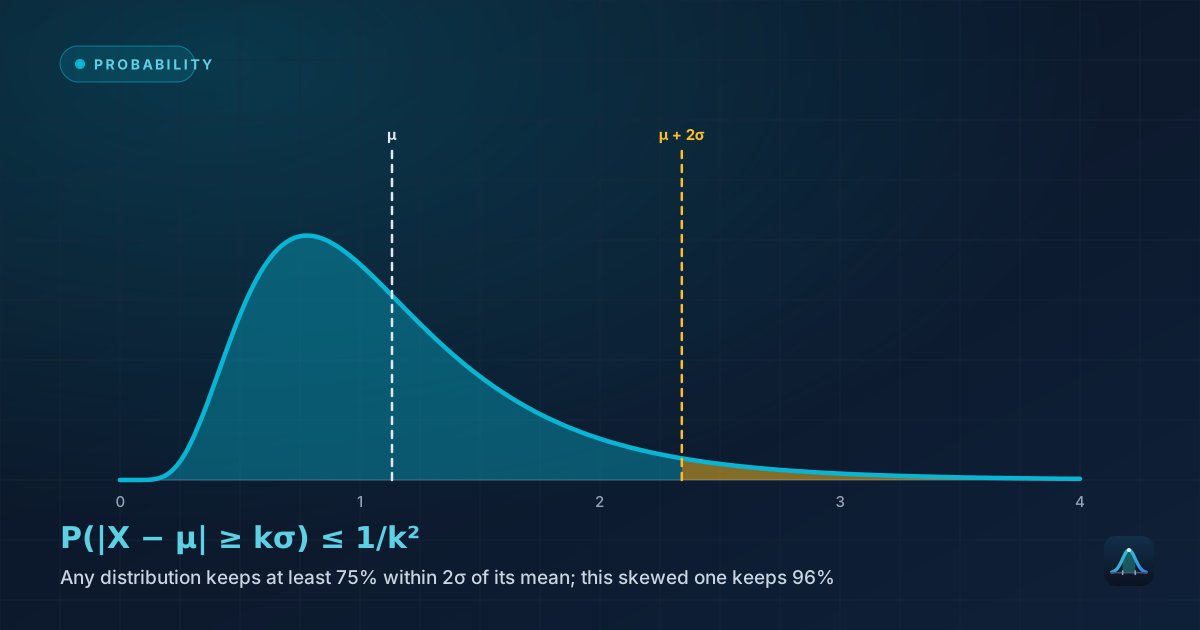 Statistics Fundamentals Editorial Team
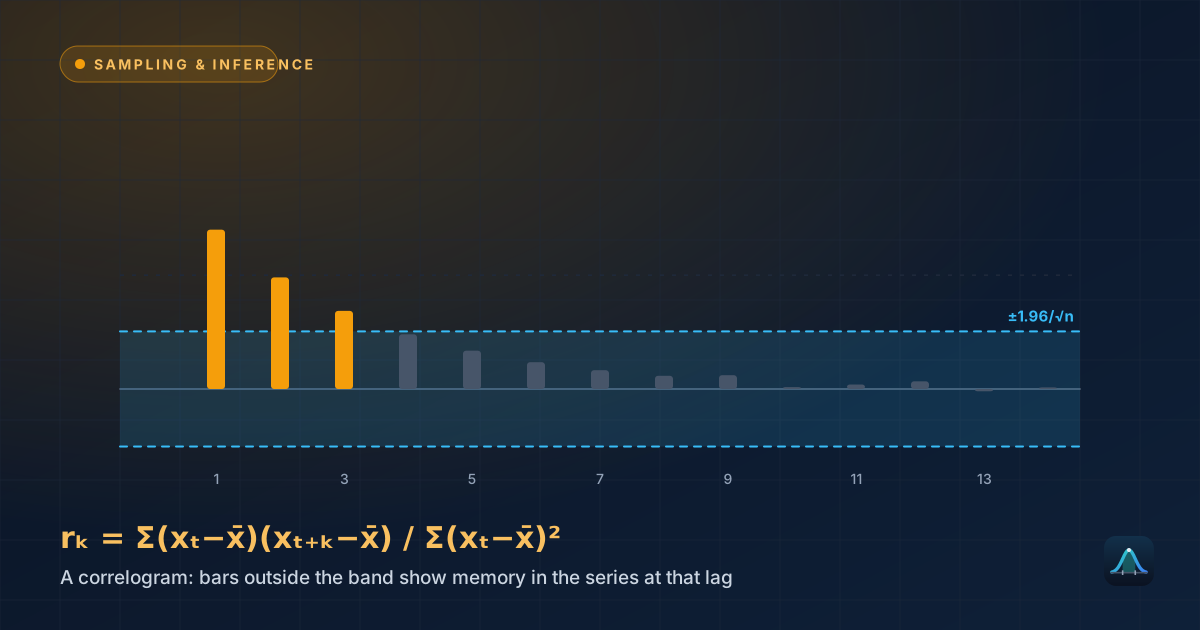 Statistics Fundamentals Editorial Team
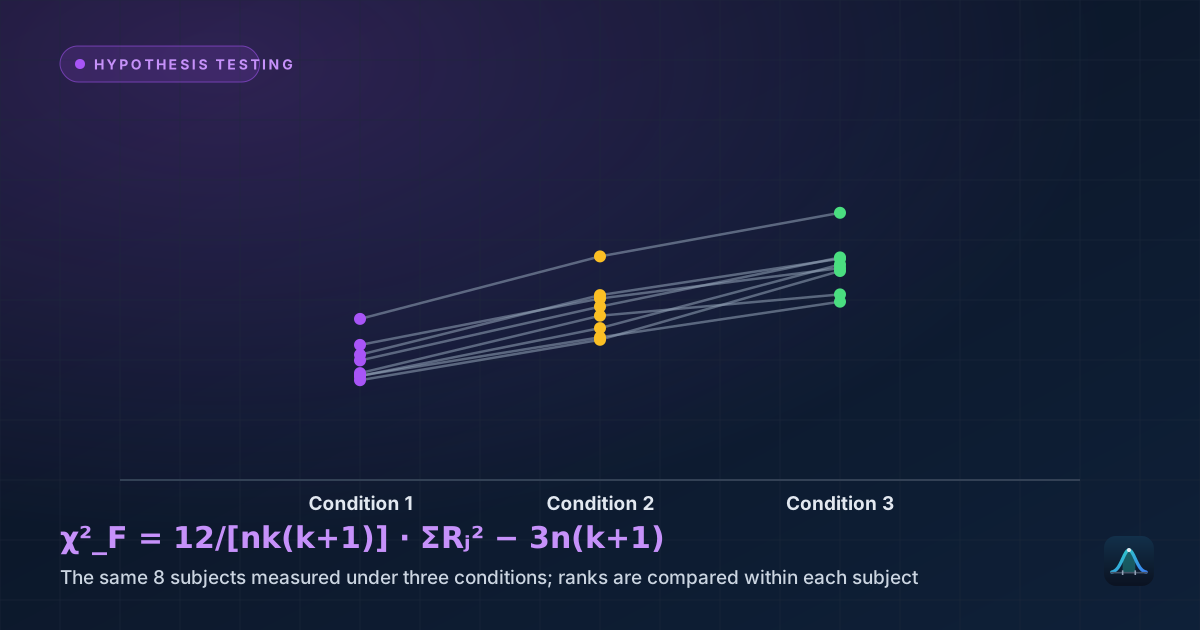 Statistics Fundamentals Editorial Team
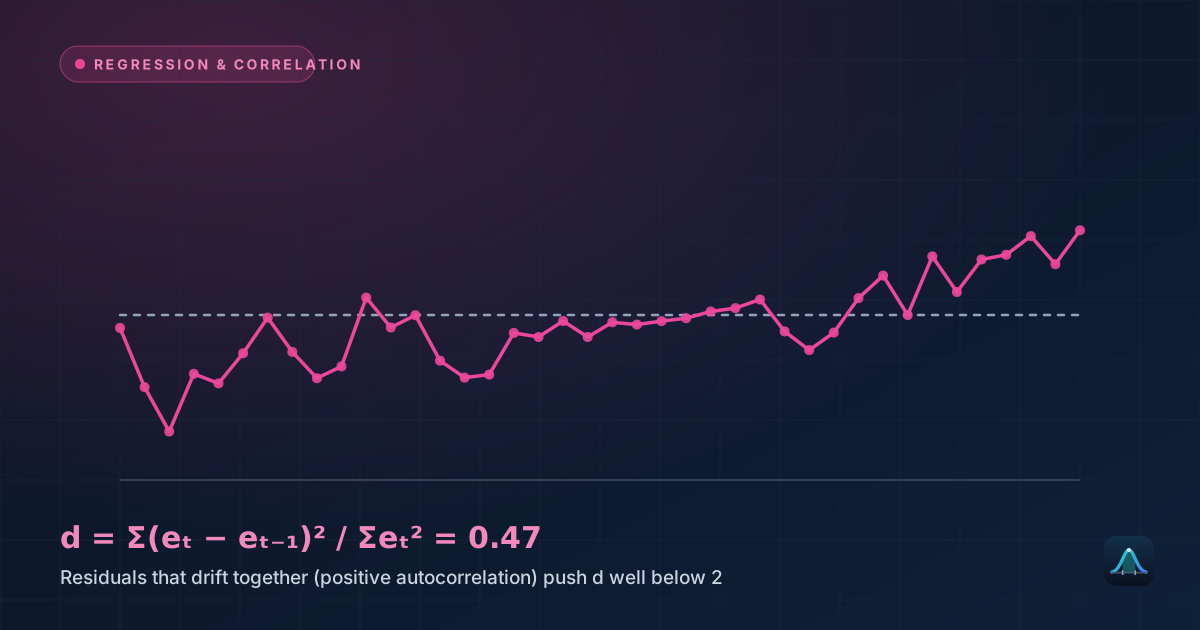 Statistics Fundamentals Editorial Team
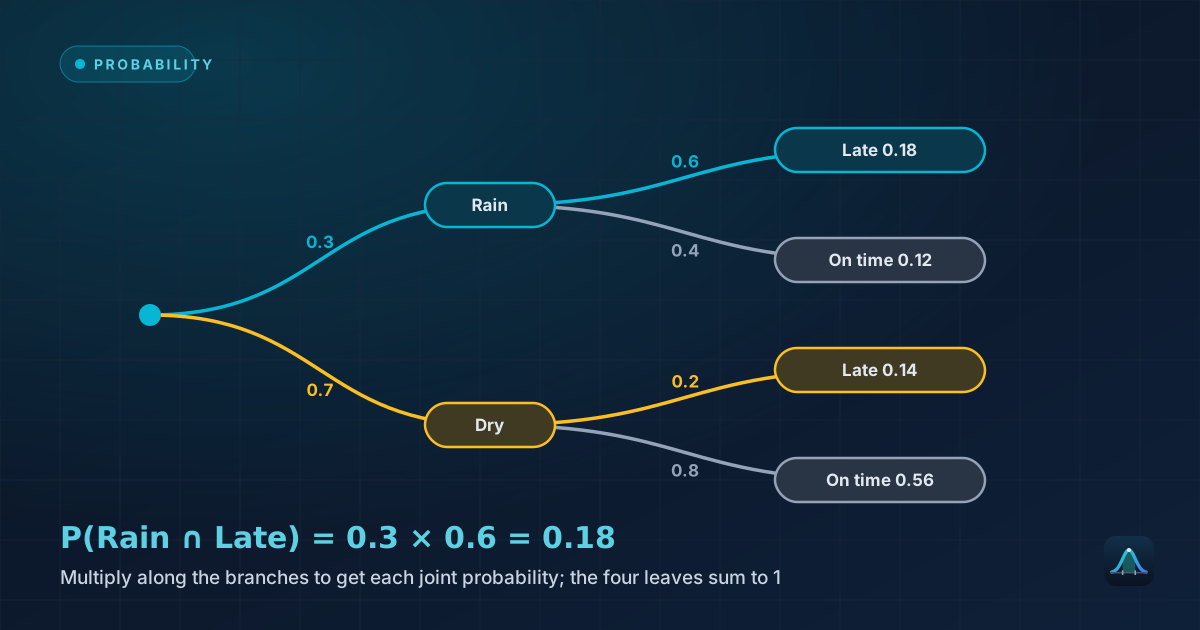 Statistics Fundamentals Editorial Team
Statistics fundamentals are the core methods for summarizing data and drawing honest conclusions under uncertainty. Mastering them is one of the most broadly useful investments any student or working professional can make.
Descriptive statistics starts with mean, median, and mode — three different answers to "what's typical," each with its own strengths. Pair these with standard deviation and the interquartile range to describe not just where data is centered, but how spread out it is.
All Descriptive Statistics Articles →Basic probability rules — addition, multiplication, and conditional probability — underpin everything else in statistics. Bayes' theorem extends this into formally updating a belief as new evidence arrives, from medical testing to spam filtering.
All Probability Articles →The Central Limit Theorem is the single result that makes inference possible — it guarantees sample means become normally distributed regardless of the population's shape. This is what lets a confidence interval from a limited sample say something rigorous about an entire population.
All Sampling & Inference Articles →The hypothesis testing framework is how you formally decide whether a difference is real or just noise. Correlation and regression model the relationship between variables — and make clear exactly why correlation never proves causation.
All Articles →Concise, insight-driven updates when we publish something worth reading — a new article, calculator, or tool. No filler. No noise. Just the good stuff.
Free forever · No spam · Unsubscribe in one click
Explore
Every article, topic, and resource — all in one place for easy discovery.
Frequently Asked Questions
The fundamentals of statistics span five core areas: descriptive statistics (mean, median, standard deviation), probability (the rules governing uncertainty), distributions (the normal distribution, binomial distribution, and others that describe how data is shaped), inferential statistics (using a sample to say something about a wider population, via confidence intervals and hypothesis testing), and regression (modelling the relationship between variables). These form the foundation for everything from a GCSE statistics exam to graduate-level research methods.
Yes, Statistics Fundamentals is completely free and always will be. We believe quality statistics education should be accessible to every student regardless of financial circumstances. All articles, calculators, and study guides are available at no cost. We also offer paid 1-to-1 tutoring for anyone who wants direct, personalized help.
Our content is developed by statistics educators with experience teaching at GCSE, A-Level, and undergraduate level. Every article and calculator undergoes review to ensure mathematical accuracy and genuine pedagogical usefulness — not just correct formulas, but explanations that actually build understanding.
We cover the full spectrum from GCSE statistics through postgraduate research methods: descriptive statistics, probability, distributions, sampling and inference, hypothesis testing (t-tests, chi-square, ANOVA), and regression and correlation. New articles and calculators are added regularly.
Unlike a traditional textbook, Statistics Fundamentals pairs every concept with an interactive calculator that shows the full step-by-step working, not just a final answer. We prioritize building genuine conceptual understanding — the "why" behind a formula — before asking you to apply it, which research shows leads to deeper, more lasting comprehension.
The most effective approach combines conceptual understanding with genuine practice on real numbers. Start by grasping why a method exists and what question it actually answers, before memorizing its formula. Work through solved examples, then attempt problems independently using our calculators to check your own working. Consistency matters more than intensity — short, regular sessions beat cramming.